Worst Medicare Supplement Companies: 7 Warning Signs to Check (2027)
Reviewed November 5, 2026. The worst Medicare Supplement companies aren’t the ones with worse coverage. Federal law standardizes Medigap, so every Plan G pays the same benefits no matter who sells it. What separates a poor company from a good one is how it prices policies over time, how many complaints regulators confirm against it, and how it treats customers when they buy, claim or switch.
Quick answer: To avoid a bad Medigap company, check its confirmed complaints in the NAIC Consumer Insurance Search and your state insurance department, ask how the policy is priced and how much its premium has gone up in the last 3 years, and walk away from anyone who pressures you or says the policy is part of Medicare. Free, unbiased help is available from your State Health Insurance Assistance Program (SHIP).
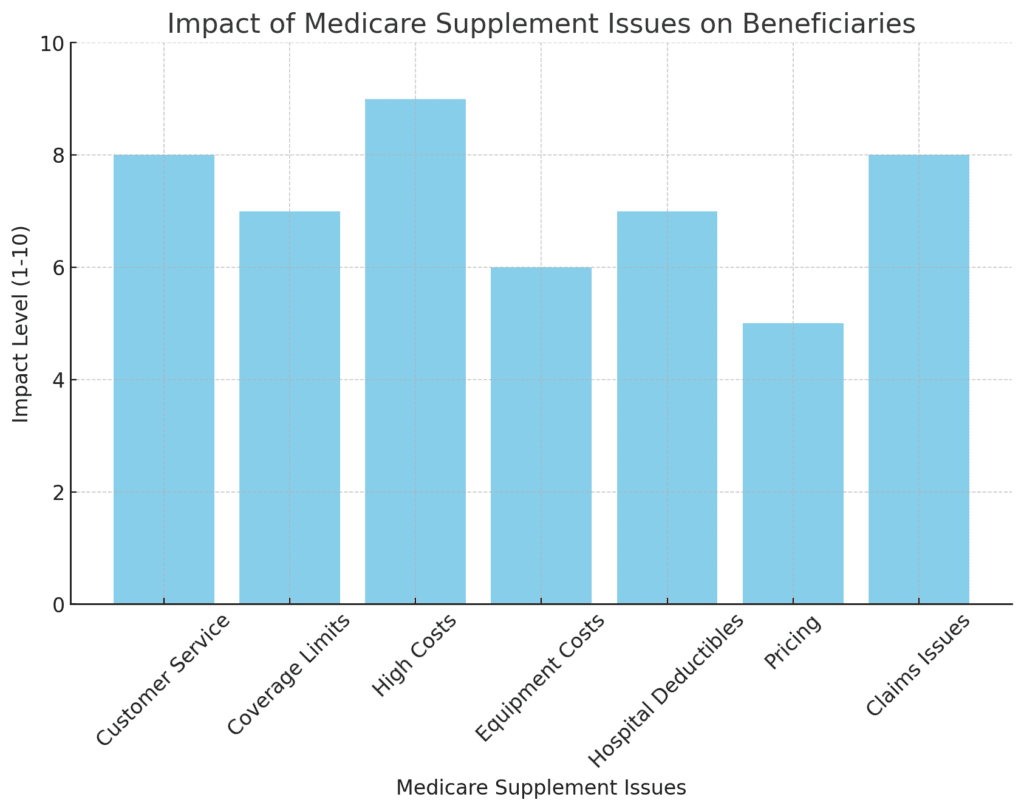
Why there’s no official list of the worst Medicare Supplement companies
Medicare.gov says all Medigap policies are standardized: policies with the same letter offer the same basic benefits no matter where you live, and price is the only difference (Medicare.gov: Medigap basics). Neither Medicare nor the NAIC publishes a “worst companies” ranking, and the NAIC warns that you shouldn’t use just one factor to decide which insurance company to use (NAIC). Lists you see online are opinions. These are the signs regulators and Medicare tell you to check.
7 warning signs of a bad Medigap company
1. A high number of confirmed complaints
The NAIC compiles closed, confirmed complaints about insurers from state insurance departments, and you can search the last three years by state, company and type of insurance in its Consumer Insurance Search. The NAIC explains that a complaint index measures how many complaints your state receives relative to the size of the company. State regulators that publish an index, such as California and Indiana, define 1.00 as a company getting its expected share of complaints for its size; a number well above 1.00 means more complaints than its size would predict. Your state insurance department may publish its own data, as Texas does.
2. Steep premium increases after you buy
Medicare.gov says each company decides how it will set the premium and that premiums typically increase each year (Medicare.gov: Medigap costs). A low first-year price can hide a pattern of large increases. CMS suggests asking: “Has the premium for this Medigap policy increased in the last 3 years due to inflation or other reasons?” (Choosing a Medigap policy).
3. Attained-age pricing you weren’t told about
Medigap policies are priced three ways. Community-rated policies generally charge everyone the same premium regardless of age. Issue-age-rated premiums are based on your age when you buy. Attained-age-rated premiums are based on your current age, so they go up as you get older; CMS notes they may be cheapest at first but can eventually become the most expensive. A company that doesn’t clearly tell you which method it uses is a red flag.
4. Pressure tactics or claims that it’s “part of Medicare”
Medicare.gov lists practices that are illegal, including pressuring you to buy a Medigap policy, lying to get you to switch, claiming to be a Medicare representative, saying a policy is part of Medicare or another federal program, or suggesting it’s approved or recommended by the federal government (Medicare.gov: illegal Medigap practices). Medicare.gov also says Medicare will never call you to sell you anything or visit you at your home (Medicare.gov: reporting fraud).
5. Selling you coverage you can’t use
It’s illegal for a company to sell you a second Medigap policy when it knows you already have one, or to sell you a Medigap policy when it knows you’re in a Medicare Advantage plan, unless you’re switching back to Original Medicare. If you replace a policy, you have a 30-day free look period, and you’ll pay both premiums for the month you have both.
6. Unclear answers about underwriting and switching
During your 6-month Medigap Open Enrollment Period, which starts the first day of the month you’re 65 or older and signed up for Part B, you can buy any Medigap policy sold in your state. After that, there’s no federal guarantee a company will sell you a policy, and it may cost more (Medicare.gov: when to buy). A good agent explains this before you buy. See Medigap underwriting questions and the 30-day free look.
7. Slow claims handling and poor service
For Medicare-covered services, Medicare pays its share first and then your Medigap policy pays its share, so repeated delays or errors on routine claims are a bad sign. Complaints about claims, delays and customer service show up in NAIC and state complaint data, which is why those records are worth checking.
What a bad company can’t do
- Cancel you for health reasons. Any Medigap policy issued since 1992 is guaranteed renewable even if you have health problems, as long as you pay the premium (CMS; Medicare.gov: how Medigap works).
- Change your benefits. Standardized plans keep the same benefits; a Plan G stays a Plan G.
How to compare Medicare Supplement companies
- Pick a plan letter using our Medicare Supplement comparison chart 2027.
- List the companies selling it in your ZIP code with Medicare’s Medigap policy search.
- Get quotes for the same letter and ask each company its pricing method, its discounts and its rate increases over the last 3 years.
- Check complaint records in the NAIC Consumer Insurance Search and your state insurance department.
- Get free help. SHIPs are state programs that give free local health insurance counseling to people with Medicare; find yours at shiphelp.org, the ACL-funded SHIP Technical Assistance Center.
Company reviews on our site include AARP Medicare Supplement plans, ACE (Chubb) and Aetna Accendo. For prices, see how much Medicare Supplement plans cost per month.
Where to report a problem
- Your state insurance department handles complaints about Medigap insurers and agents (NAIC directory of state insurance departments).
- 1-800-MEDICARE (1-800-633-4227) if you suspect Medicare fraud.
- HHS Inspector General hotline: 1-800-HHS-TIPS (1-800-447-8477) if you believe a federal law has been broken.
Frequently asked questions
Which Medicare Supplement company is the worst?
No official source ranks Medigap companies from best to worst. Check each company’s confirmed complaints and rate history in your state, since a company’s record can differ from state to state.
Are some Medicare Supplement plans worse than others?
Plans differ in what they cover, not in quality. A plan with fewer benefits, such as Plan A, leaves more costs to you. See the comparison chart to see which gaps each letter pays.
Can a Medigap company drop me if I get sick?
No. Policies issued since 1992 are guaranteed renewable even if you have health problems, as long as you pay your premiums.
What does a complaint index of 1.0 mean?
In states that publish one, such as California and Indiana, 1.00 means the company received its expected share of complaints for its size. Higher numbers mean more complaints than expected.
Is it better to buy from a big company?
Size alone doesn’t guarantee good service or stable rates. Compare price, pricing method, rate history and complaint records for the specific plan and state.
This article is general information, not insurance advice. Medicare365 is an independent website and is not affiliated with or endorsed by any insurance company or U.S. government agency.
Sources
- Medicare.gov: Medigap basics
- Medicare.gov: Medigap costs
- Medicare.gov: Illegal Medigap practices
- Medicare.gov: When can I buy Medigap?
- Medicare.gov: How Medigap works
- Medicare.gov: Reporting Medicare fraud and abuse
- CMS: Choosing a Medigap policy (PDF)
- NAIC: Consumer Insurance Search
- NAIC: How to file and research complaints
- California Department of Insurance: complaint index definitions
- SHIP Technical Assistance Center